

Past Ferguson Family Program in Food Studies Fellows
2026 Fellows

Willow Lawson
Willow will be traveling to rural Bavaria (Germany) this summer to research the cultural attitudes and belief systems of small, sustainable farmers. Afterwards, she will do similar fieldwork in Surry County, NC, to understand what parts of “farm culture” may be fading away. She hopes to understand what beliefs, rituals, and traditions are most vital for sustaining small farmers and their work.
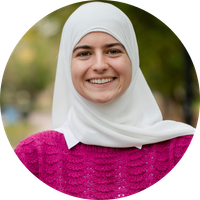
Mary Pope Bourne
Mary Pope is a rising senior majoring in Health Policy & Management at the Gilling School of Public Health, with a minor in Business of Health. As an aspiring physician, she is passionate about preventive medicine and how food, diet, and culture can shape health outcomes. This summer, she will explore Persian and Ottoman medical traditions that emphasized prevention through diet, traveling to England, Turkey, and Bosnia and Herzegovina to study manuscripts and historic medical sites. Drawing on her findings, she will connect these historical insights to modern U.S. health policy.
Katie Zarzour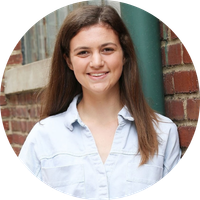
I am an Environmental Health Sciences student in the Gillings School of Global Public Health with a Food Studies minor. My primary interest within the realm of public health is the intersection between food agriculture and the environment. Through my studies, I hope to better understand how one’s surrounding environment impacts both the nutritional quality and overall availability of school meals. Through my project, I will create a triangulation between three unique areas by evaluating how school lunch programs in New York City, Avery County, and Chapel Hill-Carrboro schools impact the community’s overall health. I hope to understand how areas different from my lived experience create separate health outcomes.
Ria Mandal
My name is Ria Mandal and I am pursuing a major in Nutrition Science & Research at the Gillings School of Global Public Health, with minors in Entrepreneurship and Food Studies. Combining my passion for nutrition, education, entrepreneurship, and research, I hope to implement a culturally responsive, bilingual health and nutrition curriculum in Puente de Vallecas and Villanueva de La Canada, Spain. Using qualitative research analysis, I will build a scalable, university-embedded model for community-centered nutrition and food education and produce a publishable case study and presentation on my findings.
2025 Fellows

Faith Austin
Faith Austin spent Summer 2025 as a Ferguson Family Food Studies Fellow conducting field research in Cameroon on rural farm-to-market transportation and food security. Partnering with the Institute for Affordable Transportation and UNC Anthropology, she worked alongside smallholder farmers, educators, and government leaders to document how Basic Utility Vehicles reduce post-harvest loss and strengthen local food systems. Through interviews, focus groups, and on-the-ground collaboration across Cameroon’s East, West, and Centre regions, her Ferguson Fellowship bridged research and service—centering farmer voices while contributing to policy discussions, pilot deployments, and a forthcoming short documentary.
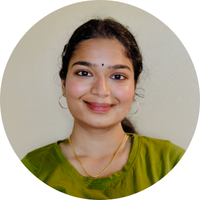
Srinithi Raj
My focus on preventative health and nutrition drives a lot of my work. This summer, I conducted research on how ethno-racial identity (ERI) impacts adolescent decision-making, and I am also studying decision-making in lunchroom environments. As adolescents accumulate and reflect on social experiences at school and beyond, they begin forming more stable interpretive frameworks that guide relationship-building, conflict management, and their position within social groups and identity-based communities. Whether it be through lunchrooms or other key social settings in and outside of school, adolescents are at a unique time in their development where their interactions and understandings of their peers are shaped by several contexts such as their ERI. My project created a model showing how perspective taking abilities could be the mechanistic factor connecting a particularly salient social context, ERI, to prosocial abilities in difficult situations. Especially as someone who would like to become a culturally-committed pediatrician, I chose my research topic because adolescence is an age when youth are frequently subjected to forms of division, and fostering experiences that promote ethnic identity development and perspective-taking may help encourage children to embrace their ethnicity in various ways like celebration and food.
Elias North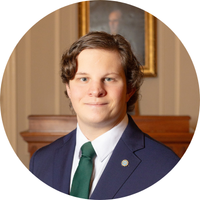
My work this past summer was centered on Appalachian foodways and their representation in American culture. The project was rooted in an ethnographic approach, comprising a series of interviews and conversations with scholars, food writers, farmers, and chefs in the region. This was supplemented with secondary source investigations into the history and foodways of Appalachia and the South, as well as archival research in the Special Collections Library at Virginia Tech. Over the course of this project, I worked to blend disciplines and methodologies, placing historical events within modern cultural and literary studies discourses to gain a better view of the place of Appalachia, and its food, in America. Key questions included what constituted Appalachian food and how those foods were presented to audiences both inside and outside of the region.
Olivia Graham
Olivia Graham is a senior at UNC Chapel Hill majoring in Biology with a focus on maternal and child health and the role of nutrition in early development. Through the Ferguson Family Food Studies Fellowship, she conducted research under Dr. Krysten North at Brigham and Women’s Hospital, studying breast milk growth factors and hormones and their links to infant growth and neurodevelopment in Bangladesh. Her work included statistical analyses, literature reviews, NICU observations, attending neonatology lectures, producing a research brief, and delivering a final departmental presentation.
Olivia also explored sustainable food systems and food justice through ANTH 237 and volunteering at the UNC Campus Community Garden. She engaged with the Edible Campus Garden and learned from community leaders like Arlo Estill of The Plant, gaining hands-on experience in gardening, composting, and understanding how local food initiatives can support vulnerable populations and reduce food insecurity.
